The Myth of the Perfect Hobby Setup
A perfect hobby setup is not required to begin. Choose a workable space, use the kit you have and buy only what solves a problem you have met.
How much do you need before you can enjoy a hobby? A perfect hobby setup is rarely the deciding factor; what matters is having the right conditions for the activity you want to try. A pencil, a pad and a clear patch of table may be all a first sketch needs.
Preparing a space is useful when it solves a practical problem. It becomes a detour when choosing boxes, matching tools and rearranging furniture takes the place of deciding what you want to make or practise. Treat the setup as a tool for the activity, not as a separate project that must be finished first.
Choose a setup for the activity, not an imagined hobby room
Start with the specific action you want to take. “Try watercolour” is broad; “paint a simple wash on paper” gives you a more useful basis for planning. Think about the surface, light, water and clean-up that action calls for, then choose a place that can accommodate them.
For sketching, a notebook and pencil might work at a kitchen table. Mending may call for a small tin of needles and thread beside the garment. A keyboard player needs an instrument positioned so they can sit and play, rather than a collection of accessories intended for some future level of practice.
Consider the people, pets and other activities that share the space. If loose thread could be a problem, store it in a lidded tin. If you use a dining table, pick materials that can be cleared away without leaving the next person with a mess. For activities involving tools, chemicals or other hazards, follow the product instructions and relevant safety guidance; ask a qualified professional if you are unsure about safe use.
Sort equipment by what it enables
Write down the first activity, then sort possible supplies according to whether they make that action possible. A useful purchase answers a current need; an appealing extra may be worth considering later, but it does not have to be part of the entry fee.
- Needed for this attempt: Check whether the activity can happen without the item; if it cannot, obtain or borrow a suitable one, and if it can, leave the item off the starting list.
- Useful for comfort: Check whether the item would address a real discomfort you already expect from the task; if so, consider a simple alternative first, and if not, defer it.
- Useful for a later technique: Check whether you plan to use that technique now; if you do, find the tool suited to it, and if you do not, wait until the technique becomes relevant.
- Storage or organisation: Check whether materials are actually getting lost, mixed up or in the way; if they are, choose a container that fits the materials, and if they are not, use the storage you already have.
- Safety equipment: Check the manufacturer’s directions and applicable safety guidance; if they call for protective equipment, use the specified kind, and if the directions are unclear, seek qualified advice rather than guessing.
- A better-quality replacement: Check whether your current tool has prevented the activity from being done; if it has, identify the specific limitation before replacing it, and if it has not, keep using it.
This is not a case for choosing the cheapest or most basic tool every time. A suitable tool can make an activity more pleasant, and the wrong one can frustrate you. The useful distinction is between a problem you have encountered and one you are only imagining for a future version of yourself.
Use shared space without turning it into a project
A dedicated room is not necessary for many pastimes. A drawer, shallow box or reusable tray can keep supplies together and let a dining table or sitting room return to its usual purpose. Think of the tray as a portable workbench: it gathers what the activity needs without claiming the whole room.
Make the transition suit the way you work. Keep small materials in a labelled container, put a note with a work-in-progress, or place a project on a tray that can be moved. These are options, not requirements; choose one only if it removes a nuisance you have actually encountered.
If you share your home, agree on where materials can be left and what needs to be cleared away. A small arrangement that respects other people’s use of the space is more useful than an elaborate corner that causes friction.
When should you change your hobby setup?
Can I start without a dedicated hobby space?
Often, yes, if you can make a suitable temporary spot and keep the activity’s materials together. Choose a surface and storage arrangement that work for the task and the people who share the room.
How do I decide whether a tool is essential?
Name one specific first activity and list what it needs to happen. If the activity cannot proceed without an item, source a suitable tool; if it can, wait until experience gives you a reason to add it.
What if I keep organising instead of doing?
Pause the organising and name the obstacle you are trying to solve. If you cannot identify one, use the supplies already available for a small attempt; if you can, make only the change needed to remove that obstacle.
When is it worth improving the space?
Change the setup when you can point to a recurring problem, such as materials becoming mixed up or a surface being unsuitable. Choose one adjustment that addresses it, then see whether the problem stops interrupting the activity.
Let the activity reveal what is missing
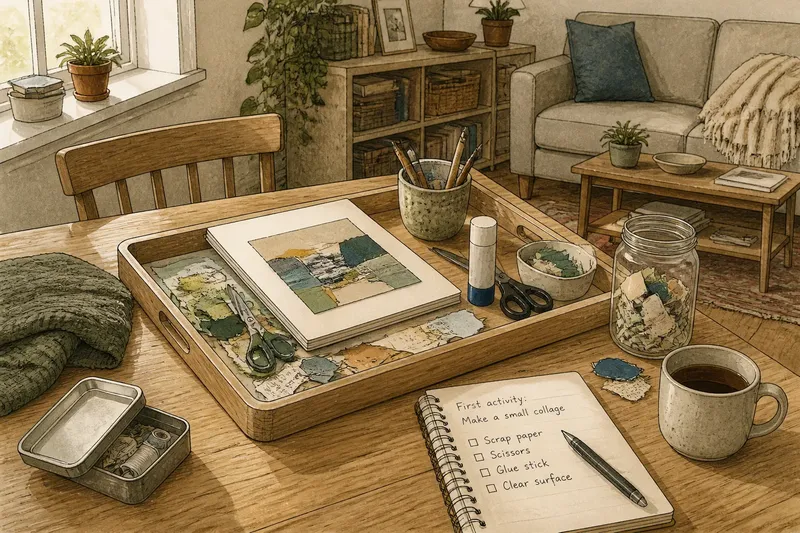
Imagine you want to try collage and already have scrap paper, scissors, a glue stick and a clear patch of table. You list the materials, set them on a tray, and make a small composition; the paper stays put and the scraps are easy to gather. The result is that a cutting mat has no clear purpose yet. If the paper slips during a later attempt, you can then compare a non-slip mat with another stable surface and choose based on that specific problem.
A first session need not decide whether a pastime belongs in your life. It can answer a narrower question: what, if anything, would make the next attempt easier or more enjoyable? Start with the smallest arrangement that lets you try the activity, and let that answer shape your hobby setup.