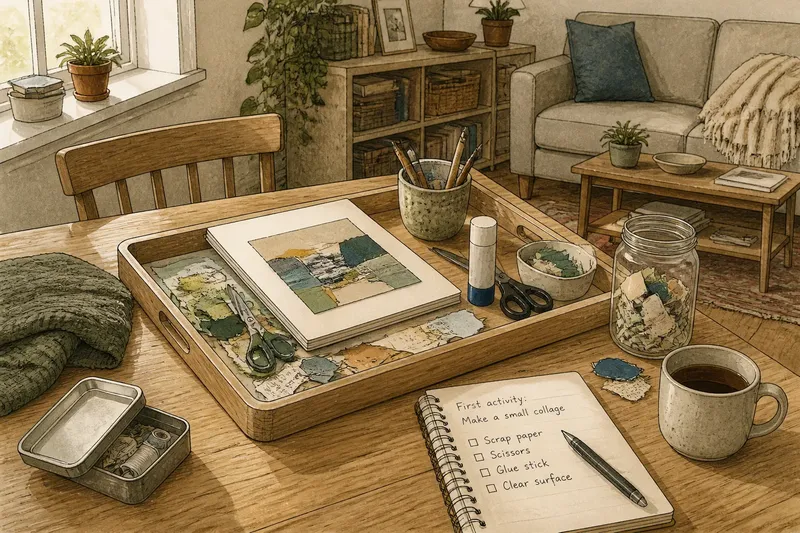
When Leisure Moved Indoors: The Rise of the Living-Room Hobby
The living-room hobby took shape as households used shared rooms for leisure, making pastimes part of everyday routines without needing a separate space.
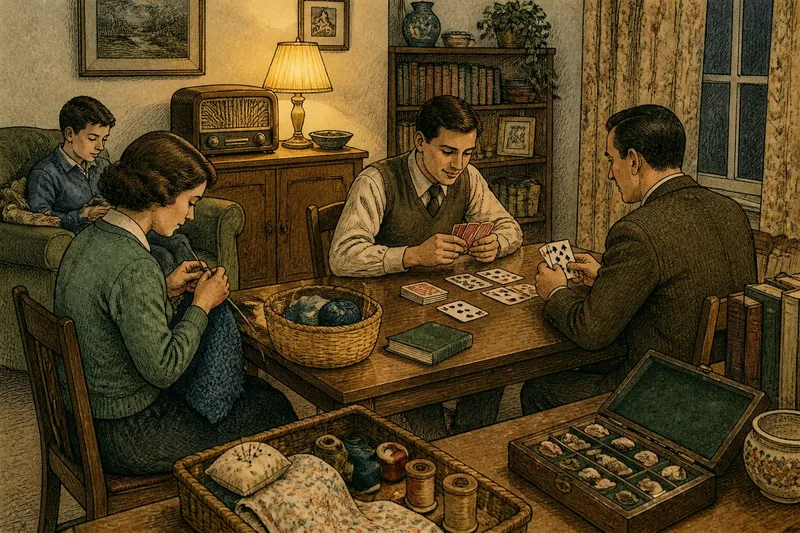
Why did the living room become a place for hobbies? The living-room hobby took shape as households used shared rooms for leisure, turning an ordinary table, chair or shelf into a place for activity. Rather than trace a single origin, it is more useful to look at how people made familiar rooms serve more than one purpose.
Imagine a front room kept neat for visitors, with most daily activity happening elsewhere. A radio, sewing basket, card game or collection can change how that room is used. It need not become a dedicated studio: the objects simply make it easier to begin a pastime, pause and return later.
Living rooms became spaces for daily use
Parlour, sitting room and living room are overlapping names, not a tidy timeline. In some households, a formal front room was reserved mainly for visitors or special occasions; in others, rooms served several purposes from the outset. The role depended on the household’s space, routines and expectations.
When a room was used more often by the people who lived there, leisure could become visible. A game left on a table, a music stand beside a chair or needlework in a basket signalled that the room was available for more than receiving guests. A pastime needed a surface, a seat and a place in the household routine—not necessarily a separate room.
This use could make leisure more social. Someone might join a game, watch a piece of handwork or talk while another person read. The room allowed people to share space without requiring everyone to pursue the same activity.
Portable objects helped hobbies fit around routines
Reading, drawing, mending and board games can be paused when a meal needs preparing or a visitor arrives. A deck of cards can go in a cupboard; knitting can be folded into a basket; a small collection can occupy a shelf. Keeping materials together makes it easier to resume an activity without setting everything up again.
Think of a storage basket as a drawer that can travel: it gathers the materials for one pastime while leaving the table clear for other uses. This arrangement suits activities that can be put away quickly. A project that needs a large surface, creates mess or must remain undisturbed may fit less easily in a shared room.
Access also depends on who controls the space. A table might be free in the afternoon and needed for supper later. Household members may have to agree on when an activity can spread out, how much noise is acceptable and where supplies can stay.
Furniture and entertainment shaped the room’s uses
A sturdy table can support games or handwork; a comfortable chair makes reading easier; shelving offers storage and display. These objects do not determine what a household will do, but they affect which activities are convenient to start and leave within reach.
Listening to a broadcast or watching a programme can gather people’s attention, while someone nearby reads, sews or sorts a collection. Shared entertainment may sit alongside other pastimes, alternate with them or make concentration harder. There is no single pattern that fits every household.
Space and schedules matter too. In a crowded room, hobbies may need to be portable and quick to clear. Where a separate parlour exists, it may remain formal while leisure happens elsewhere. “Living-room hobby” describes a way of using space, not a universal household arrangement.
A hypothetical household makes the change concrete
Say a household has a front room used mostly for visitors and a kitchen table used for daily tasks. For this invented situation, assume that the household begins spending more evenings at home. Its starting point is a mostly empty front-room table and a radio stored nearby.
First, the household brings the radio into the room and listens together after supper. Next, it keeps a deck of cards in a small cupboard and uses the table for a game on evenings when the surface is free. One person then brings in a mending basket, which can be carried away when the table is needed. The observable result is a room used for several kinds of leisure, with the table still available for visitors or other household needs.
The trade-off is that the activities must yield when the room is needed for another purpose. The household has not made a permanent hobby space; it has made a routine in which portable materials and shared access allow leisure to fit around other uses.
Shared hobbies brought company and negotiation
One person might read while another listens to music, stitches or plays a game. This side-by-side leisure can leave room for conversation without demanding constant interaction. It can also create friction: noise may interrupt reading, a project may occupy the table, and one person’s display may feel like clutter to someone else.
Make the arrangement explicit. Agree on where supplies can stay, when a shared surface must be cleared and which activities need quiet. If a hobby cannot be stored compactly, choose a time when the room is free or use another suitable space. These decisions help a shared room remain useful to more than one person.
Why did living-room hobbies suit some households?
Was the living room always used for leisure?
No. Some households reserved a front room largely for visitors or special occasions, while others used rooms in more varied ways. The pattern differed with available space and household routine.
Did radio and television replace older pastimes?
Not necessarily. People could listen or watch together, combine entertainment with a quieter activity, or choose different pastimes at different times. What worked depended on the activity and the room’s occupants.
Could every household set aside a hobby room?
No. Some homes had little spare space, and a separate room was not available to everyone. Portable hobbies could fit into shared rooms, but even those depended on access to a surface and storage.
What helps a hobby fit into a shared room?
Keep its materials together, choose an activity that suits the available surface and agree when the room needs to be cleared. If it needs more space or quiet than the room can offer, use another time or place.
Everyday objects show how leisure fitted into home life
A book beside a chair, a game in a cupboard or a craft basket on a shelf tells you more than how a room was decorated. These objects show where a pastime could begin, how it fitted around household routines and whether it could be put away when the room had another job.
For a practical way to understand the living-room hobby, notice which materials remain within reach and which activities have to wait for a clear surface. The difference points to how a household balances personal interests with shared space—and how small changes in storage or timing can make a pastime easier to resume.